Enhancing Operational Lifespan: A Technical Guide to Improving Reliability in Gear Pump Applications
Within the vast landscape of industrial fluid handling, gear pumps stand as a testament to mechanical simplicity and functional robustness. Their positive displacement principle, characterized by the meshing of gears to transfer fluid, makes them indispensable across sectors from chemical processing and lubrication systems to hydraulic power units and fuel transfer. However, the very simplicity of their design can belie the complexity of achieving long-term, failure-free operation. As industries face mounting pressure to maximize uptime, minimize total cost of ownership, and adhere to stringent safety and environmental regulations, the focus on improving gear pump reliability has shifted from reactive maintenance to a holistic, systems-based engineering discipline. This guide examines the technical pathways to achieving unparalleled dependability in gear pump applications.
The Imperative for Unwavering Dependability
The demand for enhanced reliability is driven by several converging factors. Modern manufacturing operates on lean principles where unplanned downtime translates directly into significant financial loss and supply chain disruption. In critical applications, such as those involving high-value polymers, aggressive chemicals, or high-pressure hydraulic systems, a pump failure can lead to costly product contamination, safety incidents, or damage to downstream equipment. Furthermore, the global push for energy efficiency necessitates pumps that maintain their as-designed performance over time, avoiding the gradual efficiency losses associated with wear. Consequently, reliability is no longer a secondary feature but a primary design and selection criterion, deeply intertwined with operational safety and economic performance.
Deconstructing the Fundamentals: Beyond Basic Operation
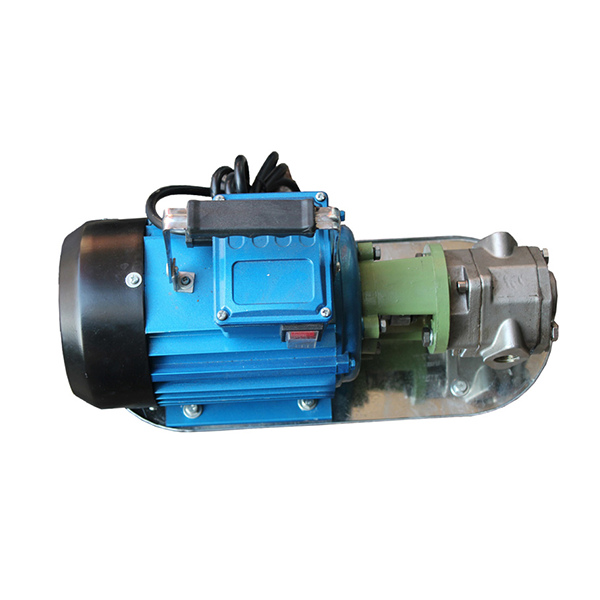
At its core, a gear pump operates by using the rotation of two or more meshing gears—typically an idler and a driven gear—to create a void at the inlet, draw in fluid, trap it in the spaces between the gear teeth and the pump housing, and then forcefully expel it at the outlet. The reliability of a gear pump is fundamentally challenged by its internal dynamics: the precise meshing of gears, the maintenance of tight internal clearances, and the management of fluid forces and thermal expansion.
Key to understanding reliability is the concept of the pressure differential. The pump generates flow; system resistance creates pressure. This outlet-to-inlet pressure differential acts axially on the gear faces and radially on the gear tips, pushing them against the housing (wear plates or bushings). Managing the stresses induced by this differential is the central challenge in reliable gear pump design. Failure modes are predictable: wear at gear tips and side plates leads to internal slippage (reduced volumetric efficiency); bearing failure due to radial loads causes seizure; and shaft seal or lip failure results in external leakage.
The Pillars of Reliability: Design, Materials, and Precision
Achieving reliability is an exercise in harmonizing product structure, material science, and manufacturing excellence.
Product Structure & Performance: Modern high-reliability pumps often incorporate pressure-compensating designs. For example, hydrostatically balanced wear plates or bushings use controlled internal leakage from the outlet pressure zone to the back of the plate, applying a counter-force that minimizes the net axial load on the gears. This dramatically reduces wear and friction. Similarly, optimized bearing spans, robust shaft diameters, and hardened gears work in concert to handle radial loads. The gear profile itself—whether involute, cycloidal, or a modified form—is engineered to ensure smooth meshing with minimal trapped fluid and pulsation.
Material Selection: Material compatibility is non-negotiable. The selection extends beyond just the pumped fluid to consider internal wear pair compatibility. Common pairings include:
Gears/Housing: Tool steel against sintered iron, carbon graphite against hardened steel, or engineered polymers like PEEK against stainless steel.
Wear Plates/Bushings: Bronze, carbon graphite, or PTFE-based composites.
The ideal material combination provides low friction, high wear resistance, and sufficient strength to withstand pressure and shock loads, all while being chemically inert to the fluid.
Manufacturing & Assembly Precision: The heart of gear pump reliability lies in micron-level tolerances. Precision grinding of gear profiles and bore geometries ensures perfect meshing and optimal clearances. Advanced honing of wear plate surfaces guarantees flatness and surface finish that promote stable lubrication films. Cleanroom assembly environments prevent contaminant inclusion, which is a primary cause of early-life failures. Finally, comprehensive testing—not just for performance, but often for noise, vibration, and harshness (NVH)—validates the integrity of each unit.
Critical Factors Influencing Performance and Longevity
Even a perfectly manufactured pump can fail if misapplied. Key influencing factors include:
1. Fluid Characteristics: Viscosity, lubricity, abrasiveness, and temperature define the operating environment. A high-viscosity fluid may require heating jackets; an abrasive slurry demands hardened materials and larger clearances.
2. System Design: Inadequate inlet conditions (suction lift, pipe sizing) can cause cavitation, the implosion of vapor bubbles that erodes metal surfaces catastrophically. Lack of proper filtration allows particulate contamination, the most common accelerator of wear.
3. Operational Parameters: Consistently operating a pump at the extremes of its pressure or speed rating drastically shortens its life. Understanding the duty cycle—continuous vs. intermittent—is crucial for correct sizing and thermal management.
4. Maintenance Practices: The use of correct seals and lubricants during servicing, adherence to torque specifications, and proper alignment during installation are often overlooked but vital for sustained reliable gear pump operation.
Navigating the Supply Chain: Selection Criteria for Partners
Choosing a supplier for critical gear pump applications requires a technical audit beyond catalog specifications. Key criteria include:
Engineering Support: Does the supplier offer application engineering to validate pump selection for your specific fluid and duty cycle?
Manufacturing Traceability: Can they provide material certifications and trace components back to their source?
Testing & Validation Data: Do they publish performance curves, life test data, or mean time between failure (MTBF) estimates?
Customization Capability: Can they modify ports, materials, or seals to meet unique requirements?
Quality Certifications: ISO 9001 and industry-specific standards (e.g., API, ATEX for explosive atmospheres) are indicators of a mature quality system.
Addressing Common Industry Pain Points
Cavitation Damage: Often misdiagnosed as bearing failure, it results from insufficient net positive suction head available (NPSHa). The solution lies in system redesign: shortening suction lines, increasing pipe diameter, or using a charge pump.
Premature Seal Failure: Caused by dry running, fluid incompatibility, or excessive shaft runout. Solutions include specifying flushed mechanical seals, double seals with a barrier fluid, or ensuring the pump is always primed.
Excessive Wear in Low-Lubricity Fluids: Water-like fluids (e.g., solvents, LPG) provide no hydrodynamic lubrication. This necessitates pumps specifically designed with low-friction, non-metallic wear components and extremely tight tolerances.
Heat Generation: Internal recirculation and friction can cause fluid overheating, degrading both the fluid and the pump. Correct sizing, external cooling, or the use of a viscosity-temperature chart is essential.
Application-Specific Reliability Considerations
Chemical Processing: Reliability centers on material integrity. Pumps for aggressive acids or solvents may use stainless steel, Hastelloy, or fluoropolymer-lined internals. Sealless magnetic drive designs eliminate leakage points entirely, enhancing safety and improving gear pump reliability in toxic fluid handling.
Mobile Hydraulics: Here, reliability must withstand shock loads, vibration, and wide temperature swings. Pumps feature heavy-duty bearings, hardened components, and robust shaft seals. The focus is on power density and durability under highly variable conditions.
Polymer Extrusion: Metering consistency is paramount. Pumps are designed for high-temperature stability, with precisely ground gears and heating/cooling jackets to maintain fluid viscosity within a tight window.
Future Trajectories: Intelligence and Integration
The future of reliable gear pump operation is converging with digitalization and advanced materials. The integration of embedded sensors for temperature, pressure, and vibration allows for condition-based monitoring, predicting maintenance needs before failure. The use of computational fluid dynamics (CFD) and finite element analysis (FEA) in the design phase optimizes fluid paths and stress distribution. Material science continues to advance, with engineered ceramics and nano-composite materials offering unprecedented wear resistance. Furthermore, the trend towards system integration sees pumps being co-engineered with their drivers and controls as a single, optimized unit, further enhancing overall system efficiency and dependability.
FAQ: Addressing Common Queries on Gear Pump Reliability
Q: What is the single most important practice to extend gear pump life?
A: Ensuring impeccable fluid cleanliness through properly specified and maintained filtration. Particulate contamination is the most pervasive cause of accelerated wear.
Q: Can a gear pump be run dry, even briefly?
A: Almost universally, no. Dry running eliminates the fluid film needed for lubrication and cooling, leading to rapid heat buildup, galling of metal surfaces, and seal destruction within seconds or minutes.
Q: How does viscosity affect pump selection for reliability?
A: Viscosity directly impacts internal clearances. For very high viscosity, a pump with larger clearances and perhaps external heating is needed to reduce resistance. For very low viscosity, extremely tight clearances and special low-friction materials are required to maintain efficiency and prevent slippage.
Q: Is a more expensive pump always more reliable?
A: Not inherently, but a higher cost often reflects more robust materials (e.g., hardened steels), precision manufacturing processes, and engineering features like pressure balancing. The key is to evaluate the total cost of ownership, where a higher initial investment in a more reliable gear pump often pays dividends through reduced downtime and maintenance.
In conclusion, improving gear pump reliability is a multidimensional pursuit. It begins with a deep understanding of the application’s demands, proceeds through the informed selection of a pump whose design, materials, and manufacturing quality are matched to those demands, and is sustained through conscientious system design and operational practices. By treating the pump not as an isolated component but as the heart of a fluid system, engineers can achieve the levels of predictability and longevity that modern industry requires.

 Pусский
 ???????
 中文
中文







 Phone
Phone
Comment
(0)